
Uncategorized
Syngonium Albo: When Half a Leaf Simply Gives Up on Making Chlorophyll
Aug
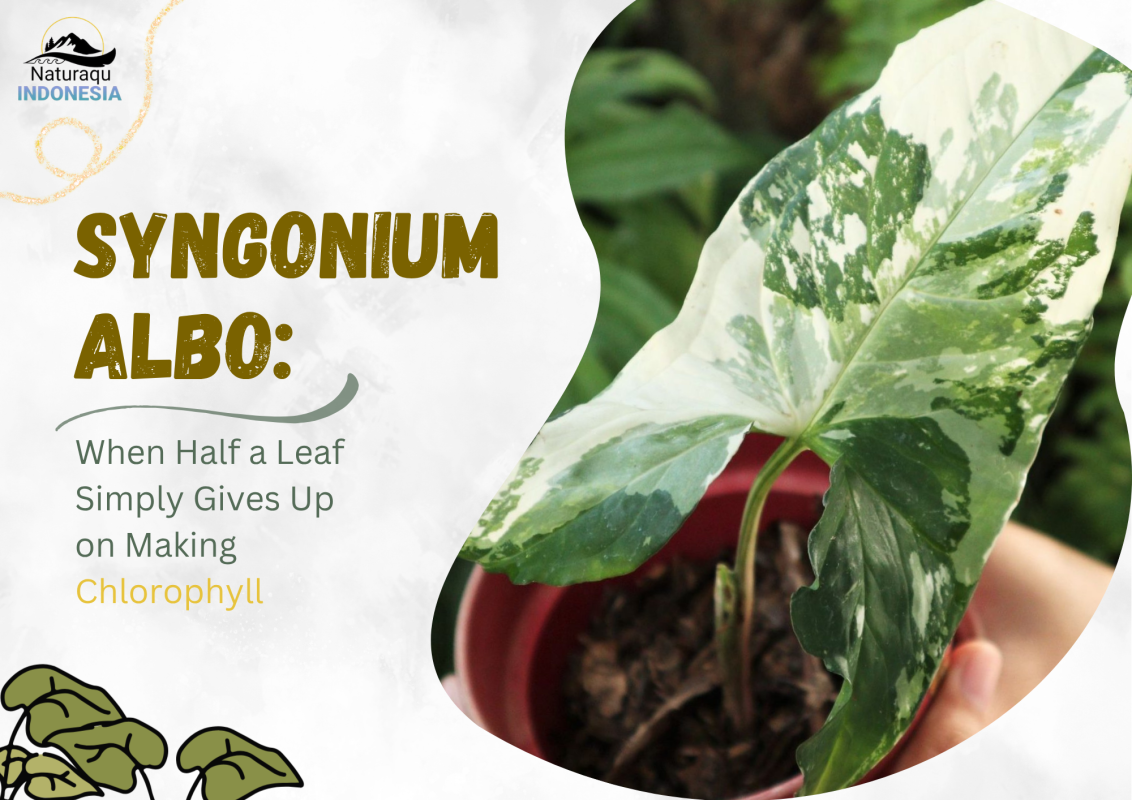
Look closely at a Syngonium Albo leaf and you’ll notice something strange. Part of it is a healthy, deep green. The rest is pure white, with no green tint at all. That white section isn’t a color choice made by the plant. It’s tissue that has completely stopped producing chlorophyll, the pigment every plant needs to turn light into energy.
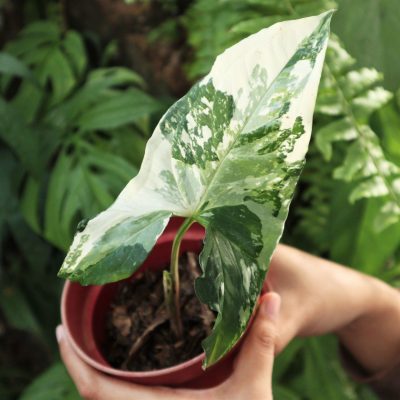
Image “Syngonium Albo arrow-shaped leaf with high white variegation and green patches”
What’s Actually Happening Inside the Leaf
Chlorophyll gives leaves their green color and drives photosynthesis. In a variegated plant like Syngonium Albo, a genetic mutation blocks chlorophyll production in certain cells. Those cells can’t photosynthesize at all. They rely entirely on the green sections nearby to produce enough energy for the whole leaf to survive.
Why the Pattern Never Looks the Same Twice
The mutation behind this variegation isn’t stable or predictable. Some leaves emerge with just a thin white streak along one edge. Others come out almost entirely white, with barely any green tissue left to sustain them. Heavily white leaves often struggle and die back faster, since there’s simply not enough working chlorophyll to keep them alive. This unpredictability is exactly why growers prize well-balanced Albo cuttings over ones with too little or too much white.
Where the Species Comes From
Syngonium Albo is a variegated form of Syngonium podophyllum, a plant native to tropical rainforests in Central and South America. In its natural, fully green form, this species climbs tree trunks using aerial roots, gradually changing leaf shape as it matures from young arrow-shaped leaves into larger, more deeply lobed foliage.
Growing Conditions That Support the White Sections
Because part of every leaf can’t produce its own energy, Syngonium Albo needs a bit more support than a fully green Syngonium:
- Bright, indirect light — the green portions need enough light to compensate for what the white sections can’t produce
- Consistent humidity around 60% or higher, which helps new leaves unfurl fully instead of stalling
- A well-draining aroid mix, watered once the top layer of soil dries out
- A moss pole or trellis, which encourages larger, more mature leaves with clearer variegation patterns
When a Stem Reverts to Solid Green
Occasionally a stem starts producing leaves with little to no white at all, reverting toward the plant’s natural green form. This happens because fully green tissue photosynthesizes more efficiently, so the plant naturally favors that growth when left unchecked. Many growers prune reverted stems back to redirect the plant’s energy toward variegated growth instead.
Why Collectors Keep Choosing This One
The stark, clean contrast between white and green sets Syngonium Albo apart from softer variegated patterns seen in other aroids. Combined with the plant’s naturally fast, climbing growth habit, it offers collectors a variegated species that’s genuinely dramatic to look at, even for people new to growing patterned plants.
Bring Home Your Own Syngonium Albo
Naturaqu ships healthy, well-established Syngonium Albo directly from our nursery. Every order includes a free Phytosanitary Certificate. We offer wholesale pricing for bulk orders. If a plant arrives dead on arrival, we replace it at no extra cost, excluding shipping. International shipping takes roughly 1-2 weeks once export permits clear.
Browse more Syngonium varieties in our Syngonium category, or see our full range of Variegated Plants. Questions about care or shipping? Reach out through our contact page — we’re happy to help before you order.
For more on the species itself, see its listing on Wikipedia and Plants of the World Online.
