
Uncategorized
Alocasia Olanii: The Rare Borneo Aroid That Still Doesn’t Have an Official Name
Aug
Most plants sold under a species name have already gone through formal scientific description. A botanist examines the plant, compares it to relatives, and publishes it with a permanent Latin name. Alocasia Olanii hasn’t reached that stage yet. “Olanii” is a trade name. Growers borrowed it from the person who first found the plant in the wild, and the species still awaits full botanical publication.
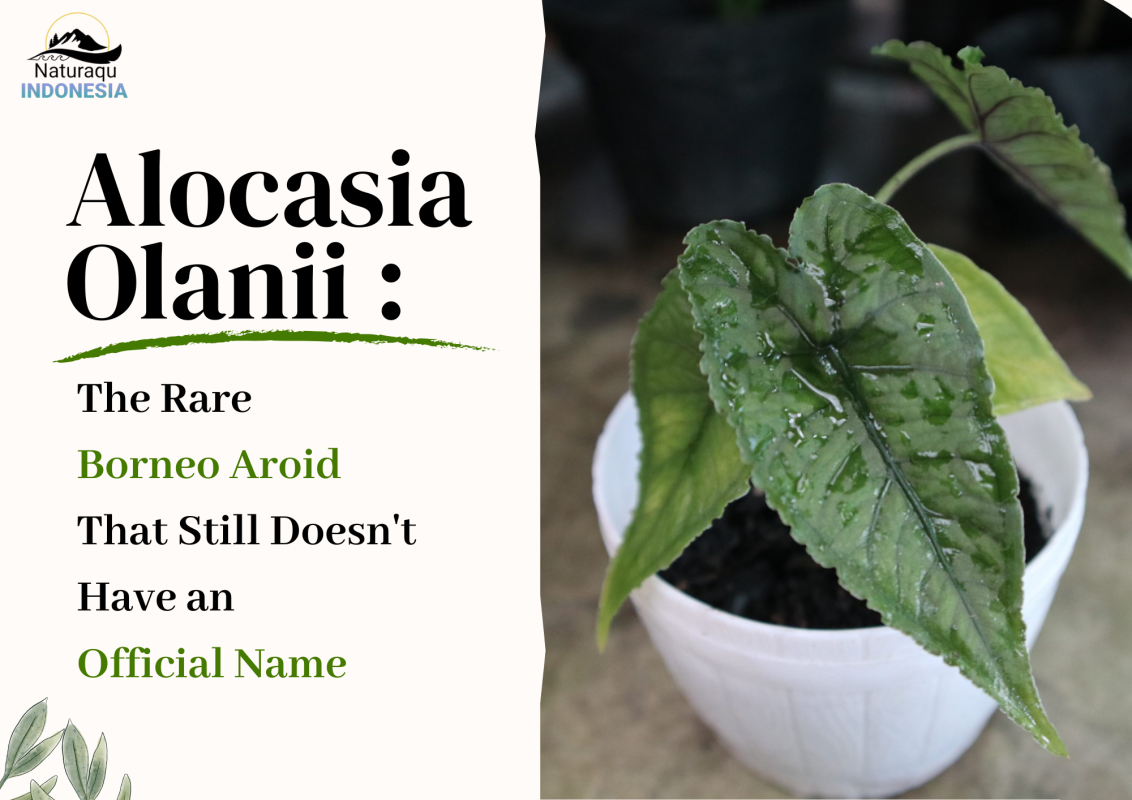
Image “Young potted Alocasia Olanii with dark green serrated leaves”
A Leaf With a Genuinely Unusual Sheen
Collectors love Alocasia Olanii for its coloring. The upper leaf surface is dark green with a bluish, almost metallic cast. This sheen shifts depending on the angle of light. Flip the leaf over and you’ll see soft purplish tones underneath, while the petioles carry their own deep reddish color. Few Alocasia species combine all three traits on one plant. That combination is part of why Olanii stands out, even in a genus known for dramatic foliage.
Where It Comes From
Alocasia Olanii is native to the rainforests of West Kalimantan, in Indonesian Borneo. It grows there as an understory plant beneath the forest canopy. That environment is warm, consistently humid, and shaded from direct sun. It shapes almost every care requirement the plant has once it leaves its native habitat. In the wild, mature specimens can reach 1.5 meters tall, with leaves nearing a meter across. Plants grown as houseplants usually stay far more compact.
Why It Still Doesn’t Have a Formal Name
Describing a new plant species formally takes time. Botanists need detailed comparisons against related species, herbarium specimens, and peer review before publication. Alocasia Olanii is closely related to Alocasia ‘Chienlii’, another Bornean species still waiting for the same formal recognition. Growers and collectors keep trading the plant under its informal name in the meantime. This happens often with aroids from Borneo, where unpublished species turn up more frequently than most people expect.
Growing Conditions It Needs
You can’t recreate a Bornean rainforest understory exactly, but these conditions get close enough for healthy growth:
- Bright, indirect light — direct sun scorches leaves that evolved under forest canopy shade
- High humidity, ideally 60% or above, to prevent leaf edges from crisping
- A well-draining, organically rich potting mix, since the tuberous roots don’t tolerate standing water
- Consistent warmth without cold drafts, which can push the plant into unwanted dormancy
Why Supply Stays Limited
Alocasia Olanii is still informally named, and it grows in a fairly narrow native range. Nurseries don’t mass-produce it the way they do more established Alocasia varieties. Most available plants come from limited propagation runs rather than large-scale production. That keeps it firmly in rare-plant territory rather than on mainstream houseplant shelves.
Why Collectors Value the “Unofficial” Status
Some growers see the missing scientific name as part of the appeal. It signals a plant still close to its wild origin, freshly introduced into cultivation rather than bred and mass-propagated for years. Borneo’s rainforests are still producing genuinely new plants for science and collectors alike.
Bring Home Your Own Alocasia Olanii
Naturaqu ships healthy, well-established Alocasia Olanii directly from our nursery whenever stock is available. Every order includes a free Phytosanitary Certificate. We offer wholesale pricing for bulk orders. If a plant arrives dead on arrival, we replace it at no extra cost, excluding shipping. International shipping takes roughly 1-2 weeks once export permits clear.
Browse more Alocasia species in our Alocasia category, or see our full range of Rare Plants. Questions about care or shipping? Reach out through our contact page — we’re happy to help before you order.
For more on the genus itself, see the overview on Wikipedia and the genus record on Plants of the World Online.
