
Uncategorized
Why Macodes Sanderiana Costs More Than Most Orchids You’ve Seen
Aug
Walk past most orchids and the flower does all the talking. Walk past a Macodes Sanderiana and the flower is almost beside the point — this is a plant people buy for its leaves, and the price reflects just how hard those leaves are to grow well.
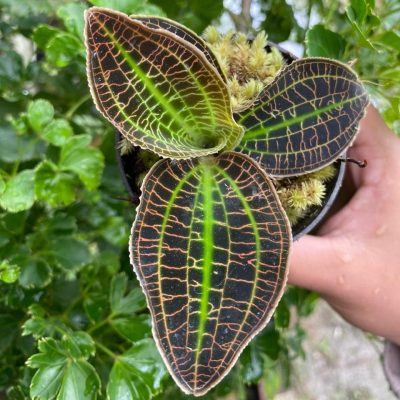
Image “Macodes Sanderiana leaves with dark green and copper-red vein pattern”
A Jewel Orchid Grown for Foliage, Not Flowers
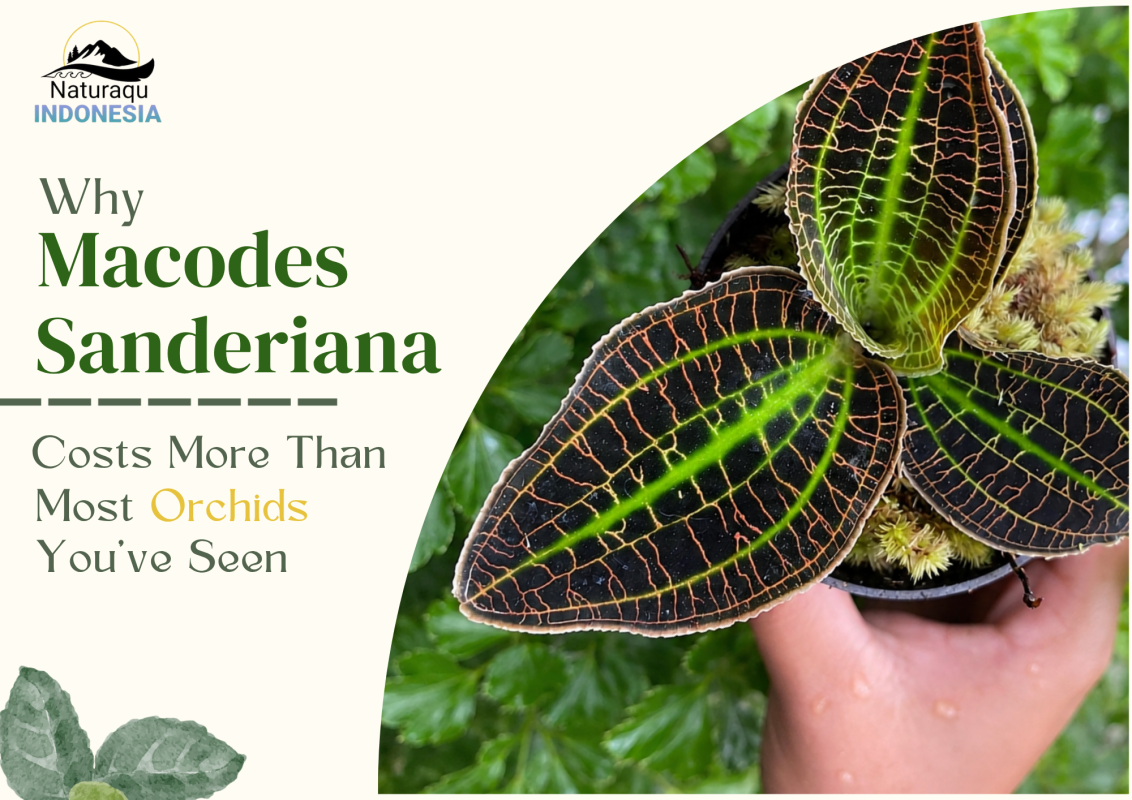
Macodes Sanderiana belongs to a group commonly called jewel orchids, a loose category of orchid species valued for ornamental leaves rather than showy blooms. Its dark, velvety leaves are crossed with fine, shimmering veins in gold or copper tones, arranged in an intricate net-like pattern across each leaf. The flowers, when they do appear, are small and unremarkable by orchid standards — the leaf is the entire reason this plant is in demand.
Where It Comes From and Why That Matters for Price
Macodes Sanderiana grows naturally on the humid forest floor of Southeast Asia, in deep shade beneath the tree canopy where light is scarce and consistent moisture is constant. Recreating that narrow set of conditions outside its native habitat is part of what makes cultivation slower and less forgiving than growing a typical flowering orchid.
Why Growers Can’t Rush the Process
Unlike many houseplants that root quickly from a simple cutting, jewel orchids like Macodes Sanderiana are usually propagated through division or tissue culture, both of which take considerably longer to produce a sellable plant. A young division needs time to establish its own root system before it can handle normal handling and shipping, and rushing that process often kills the plant outright. Growers who want healthy, established specimens simply have to wait out a longer production cycle than they would with a fast-rooting tropical plant.
The Narrow Conditions It Demands
Keeping the leaf pattern vivid and the plant healthy takes a fairly specific setup:
- Low to medium indirect light — too much direct sun fades and scorches the velvety leaf surface
- High humidity, ideally 70% or above, which is why most growers keep it in a closed terrarium or humidity dome
- A loose, moisture-retentive substrate such as sphagnum moss, since regular potting soil holds too much water around the roots
- Stable warm temperatures, since sudden drops or drafts stress the plant more than most tropical houseplants
Why It’s Harder to Keep Alive Than It Looks
Macodes Sanderiana has a narrower margin for error than most houseplants sold at a similar price point. Overwatering rots the roots quickly, underwatering causes the thin leaves to crisp, and average household humidity is usually too low to sustain healthy growth long-term without a terrarium or cabinet setup. This lower tolerance for inconsistent care is a major reason it isn’t stocked as widely as easier jewel orchids, and why the ones that are available cost more.
So Is the Higher Price Worth It?
Given the longer propagation timeline, the specific humidity requirements, and the lower success rate compared to easier terrarium plants, the price gap between Macodes Sanderiana and a common flowering orchid reflects real production difficulty rather than a premium for rarity alone. For anyone building a terrarium or shaded plant collection, it’s one of the few plants where the leaves alone justify the investment.
Bring Home Your Own Macodes Sanderiana
Naturaqu ships healthy, well-established Macodes Sanderiana directly from our nursery. Every order includes a free Phytosanitary Certificate, and wholesale pricing is available for bulk orders. If a plant arrives dead on arrival, we replace it at no extra cost, excluding shipping. International shipping takes roughly 1-2 weeks once export permits clear.
Browse more jewel orchids in our Jewel Orchid category, or see our full range of Rare Plants. Questions about terrarium setup or shipping? Reach out through our contact page — we’re happy to help before you order.
For more on jewel orchids as a group, see the overview on Wikipedia and the genus record on Plants of the World Online.
