
Uncategorized
Hoya Imbricata: The Rare Shingle-Leaf Hoya That Lives in Harmony With Ants
Jul
Most Hoya earn their reputation from flowers. Hoya Imbricata earns its reputation from doing the opposite of every other vine on the shelf: instead of trailing outward, it presses flat against bark and stays there, leaf after leaf, like someone tiling a roof. It is quiet, slow-growing, and unlike anything else in a Hoya collection.
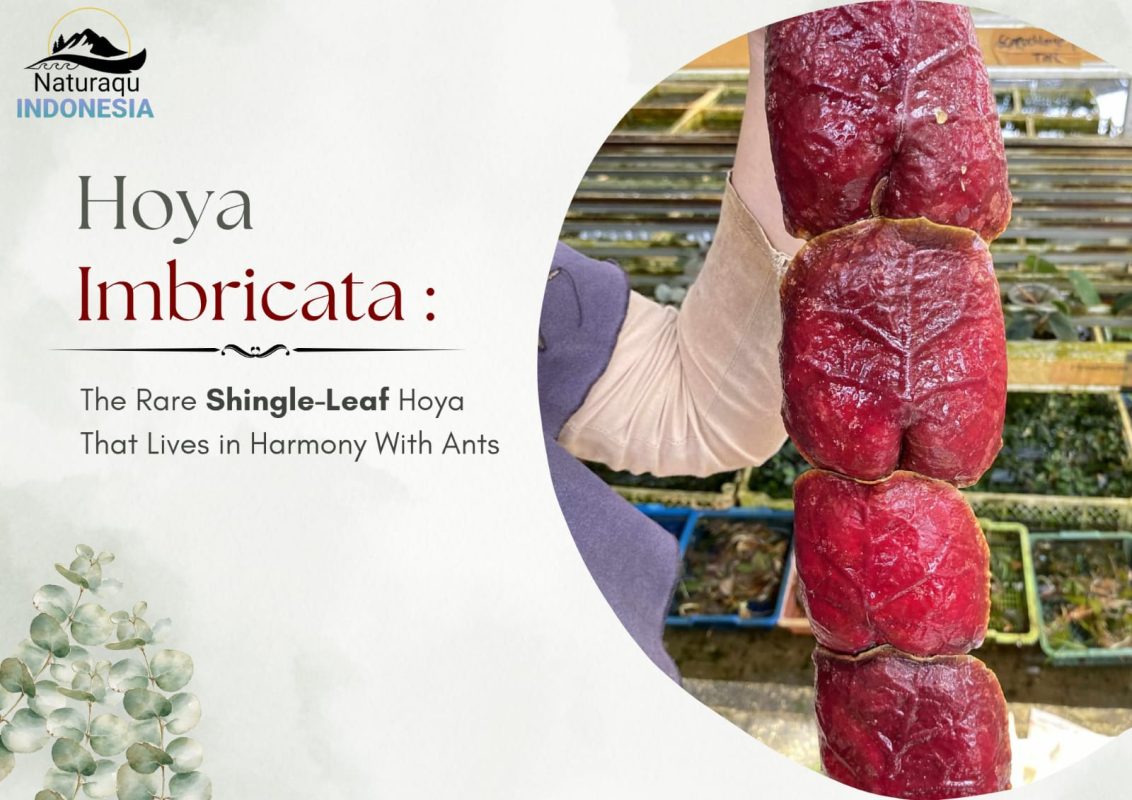
Image “Hoya Imbricata with deep red, overlapping single-shaped leaves”
Where This Rare Hoya Comes From
Hoya Imbricata grows naturally across Borneo, the Philippines, and other parts of tropical Southeast Asia, usually clinging to tree trunks in humid lowland forest. It lives as an epiphyte, meaning it takes nothing from the tree itself — the bark is simply a surface to hold onto while the plant draws moisture and nutrients from the air and the debris trapped under its own leaves.
The Shingle-Leaf Shape That Sets It Apart
Each leaf is round, thick, and slightly domed, growing one per node instead of the usual pair most Hoya show. As the vine climbs, every new leaf overlaps the one before it, hugging the mounting surface so closely that almost no bark shows through. The result looks less like foliage and more like scales, which is exactly where the name imbricata comes from — Latin for “overlapping, like roof tiles.”
Living in Harmony With Ants
Here is the detail that makes this plant such a rare find: each leaf forms a small hollow pocket against the bark, and ant colonies move directly into that gap. The ants gain shelter, and the plant benefits from the nutrients left behind in the debris the ants carry in. This relationship is called myrmecophily, and Hoya Imbricata is one of the few houseplants that displays it so visibly — a genuine partnership rather than a pest problem.
Growing Conditions It Actually Wants
Because it grows flat instead of trailing, Hoya Imbricata does best mounted on a slab of wood, cork, or tree fern rather than potted in soil. A few conditions to keep in mind:
- Bright, filtered light — avoid direct harsh sun, which can scorch the domed leaves
- High humidity, ideally 60% or above, which is why many keep it in a greenhouse cabinet or enclosed terrarium
- A mounting medium that holds some moisture but drains fast, such as sphagnum moss backed against the slab
- Regular misting, since the roots cling more than they absorb from a soil reservoir
A Simple Care Routine
Once mounted, care stays fairly hands-off. Mist every few days rather than soaking the mount, feed lightly during the growing months with a diluted balanced fertilizer, and resist the urge to peel the leaves away from the surface to check on it — that flat contact is exactly what keeps the plant healthy. Given time, a single mount will fill in completely, leaf tiling over leaf, without ever needing repotting.
Why It Rarely Shows Up for Sale
Hoya Imbricata rarely appears at big box nurseries, and its growth habit means every mounted specimen looks different depending on how the leaves have laid themselves down over time. For anyone building a Hoya collection past the common trailing varieties, it is one of the few species that offers a genuinely different silhouette — and one that isn’t easy to find twice.
Bring Home Your Own Hoya Imbricata
Naturaqu ships healthy, well-established Hoya Imbricata directly from our nursery. Every order includes a free Phytosanitary Certificate, and wholesale pricing is available for bulk orders. If a plant arrives dead on arrival, we replace it at no extra cost, excluding shipping. International shipping takes roughly 1-2 weeks once export permits clear.
Browse more rare Hoya and epiphytic species on our Hoya category, or see the full lineup in our shop. Questions about mounting or shipping? Reach out through our contact page — we’re happy to help before you order.
For more on the species itself, see its listing on Wikipedia and Plants of the World Online.
