
Uncategorized
Raphidhophora Tenuis Variegated: The Aroid That Looks Like It Was Painted With a Thin Brush
Aug
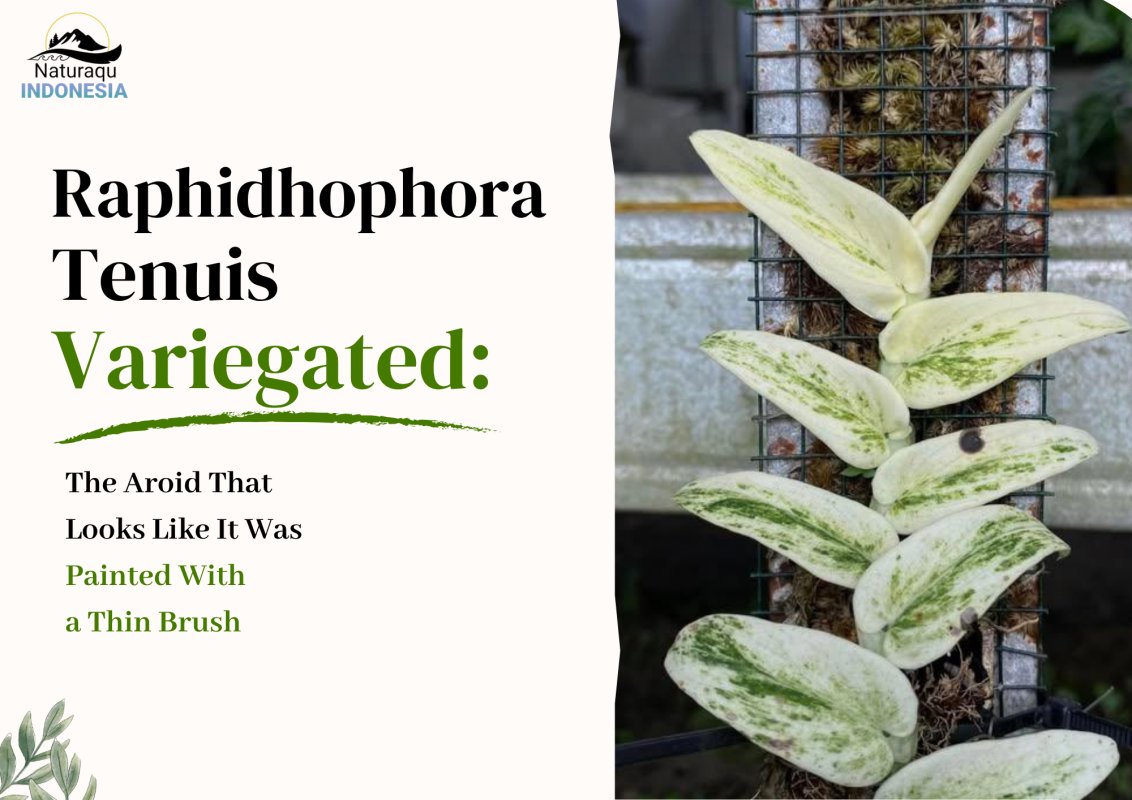
Most variegated aroids show off broad splashes of white across wide leaves. Raphidhophora Tenuis Variegated does something narrower and quieter: its leaves are thin, elongated blades, and the variegation runs along them in fine streaks — as if someone dragged a thin brush down each leaf rather than splattering paint across it.
Image “Raphidhophora Tenuis Variegated climbing on moss pole with cream and green speckled leaves”
A Slimmer Silhouette Than Most Aroids
The species name tenuis is Latin for “thin” or “slender,” and it describes the plant accurately. Unlike broader-leafed aroids such as Monstera or Philodendron, Raphidhophora Tenuis grows narrow, almost blade-like leaves along a climbing vine. This slimmer shape gives the variegation a completely different visual effect — instead of large white patches, the pattern reads as fine linework running the length of each leaf.
Where This Species Comes From
Rhaphidophora is a genus native to tropical regions stretching from Africa through Southeast Asia and into the Western Pacific, with the genus including close to 100 species. Raphidhophora Tenuis grows as a climbing epiphyte in humid forest understories, using aerial roots to cling to tree trunks as it climbs toward better light.
Why the Variegated Form Is Harder to Come By
As with most variegated aroids, the white streaking is the result of an unstable genetic mutation rather than a fixed trait. A mother plant needs to consistently throw stems with usable variegation, and cuttings taken from it don’t always carry the same pattern. Some cuttings root out with barely any white streaking, while heavily variegated cuttings can struggle if too much of the leaf lacks chlorophyll to sustain growth. This inconsistency is why stable, well-patterned specimens take longer to produce and cost more than the plain green form.
Growing Conditions It Needs to Thrive
A few adjustments help keep this aroid healthy and its pattern vivid:
- Bright, indirect light — the white streaked sections can’t photosynthesize, so the plant needs enough overall light to compensate
- Humidity around 60% or higher, which helps new leaves unfurl fully rather than staying stunted
- A well-draining aroid mix with some moisture retention, watered once the top layer dries out
- A moss pole, trellis, or other support to climb, which encourages larger, more defined leaves over time
What to Watch For as It Grows
Occasionally a stem reverts to producing solid green leaves with no streaking at all. This is a normal part of growing variegated aroids and not a sign of poor care. Some growers prune reverted stems back to redirect the plant’s energy toward variegated growth, while others simply let the plant keep both types of leaves for a fuller, more textured look.
Why It Stands Out on a Shelf of Aroids
Next to the broad, patchy variegation common in Monstera or Philodendron collections, Raphidhophora Tenuis Variegated brings a different texture entirely — delicate, linear, almost drawn rather than painted. For anyone building a varied aroid collection, it’s a way to add contrast in leaf shape as well as pattern.
Bring Home Your Own Raphidhophora Tenuis Variegated
Naturaqu ships healthy, well-established Raphidhophora Tenuis Variegated directly from our nursery. Every order includes a free Phytosanitary Certificate, and wholesale pricing is available for bulk orders. If a plant arrives dead on arrival, we replace it at no extra cost, excluding shipping. International shipping takes roughly 1-2 weeks once export permits clear.
Browse more Rhaphidophora species in our Rhaphidophora category, or see our full range of Variegated Plants. Questions about care or shipping? Reach out through our contact page — we’re happy to help before you order.
For more on the genus itself, see the overview on Wikipedia and the species record on Plants of the World Online.
