
Uncategorized
How to Acclimate New Plants After Shipping: A Simple Guide for Your First Two Weeks
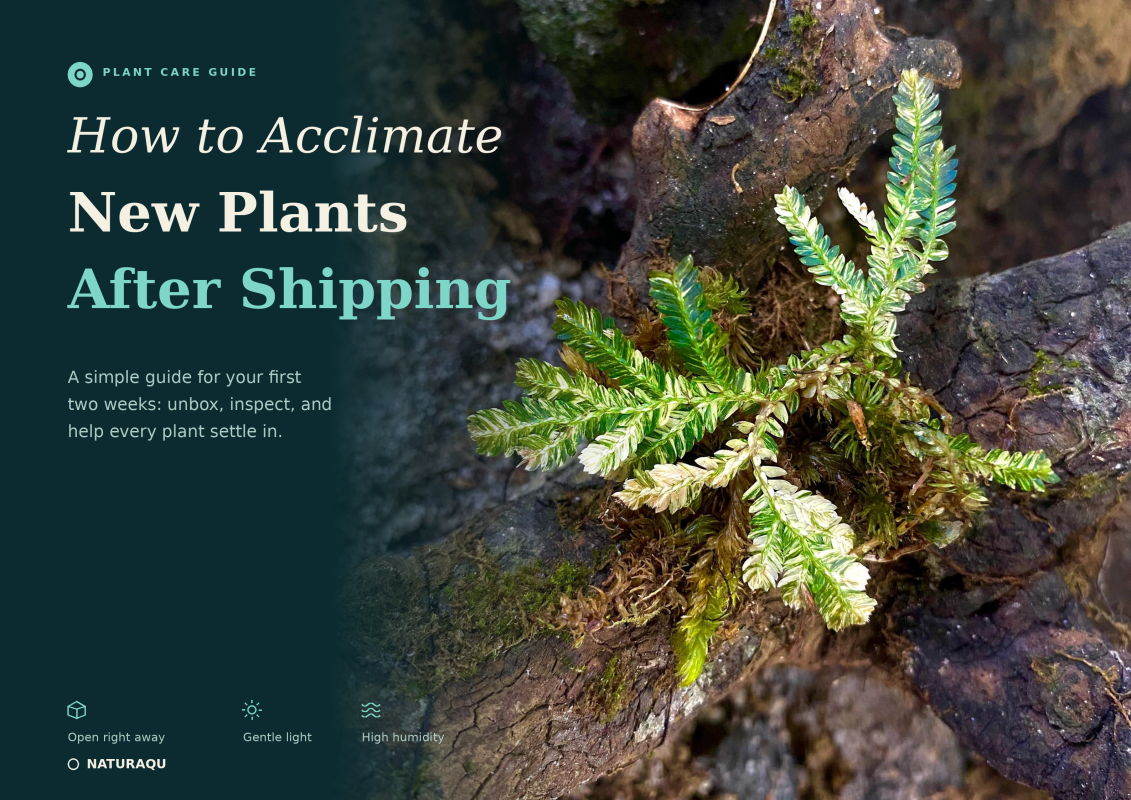
Nov
Your plants have finally arrived, and they look a little rough. A few leaves are yellow, some stems are bent, and the whole plant looks tired. Do not panic. Knowing how to acclimate new plants turns that first week from a worry into a routine, and it makes the difference between a plant that recovers fast and one that struggles. This guide walks you through unboxing, inspecting, and caring for your new plants, whether they are jungle plants, Cryptocoryne, Bucephalandra, or moss.
Why New Plants Look Rough After Shipping
A shipped plant spends several days in a dark box. It gets no light, little air, and sometimes a few temperature swings along the way. That stress shows up as yellow leaves, droopy stems, or a few lost leaves.
This is normal. Most plants adjust within 7 to 14 days, and rarer species can take longer. Your job is to give the plant steady, gentle conditions while it recovers, instead of fixing everything at once.
Step 1: Open Your Package Right Away and Record It
Open the box as soon as it arrives. The plants need light and air, and a delay makes the stress worse.
Take clear photos or a short video while you open the package. Our terms and conditions ask for clear photos or videos taken right after opening, and they set the claim window: 2 days after arrival for Bucephalandra and aquatic plants, and 1 day for jungle plants. Check the page for the full details, and contact us quickly if something looks wrong.
Step 2: Inspect Each Plant
Unpack gently, and avoid pulling tape or packing material off the leaves. Then check each plant:
- Yellow or bent leaves: common after shipping and usually temporary.
- Mushy, black, or fully yellow leaves: remove them with clean scissors, because rotting tissue spreads problems.
- Pests: shine a flashlight on the undersides of the leaves and along the stems.
- Roots: check that they look firm and not slimy.
If you have other plants at home, keep the new ones apart for the first week, and watch them closely. That way, a hidden pest or disease does not spread to your collection.
Step 3: How to Acclimate New Plants by Type
Different plants need different first steps. The method for how to acclimate new plants depends on how we pack them, so handle each type this way once it arrives.
Jungle and terrestrial plants. We wrap the roots in sterilized sphagnum moss. Check the moisture: if the moss feels dry, give a small drink, and if it feels wet, leave it alone. Do not repot right away. Wait until you see fresh growth, which usually takes about two to three weeks.
Bucephalandra. We dry these before packing and bag each one separately. Rinse the plant gently, then attach it to wood or rock. Do not bury the rhizome, because it rots in the substrate. Our Bucephalandra clumps look especially good on hardscape.
Cryptocoryne. We wrap these in moist paper towels. After planting, keep the crown just above the substrate. Many Cryptocoryne drop most of their leaves in the first days, which growers call “crypt melt.” Leave the roots in place, remove the melted leaves so they do not rot, and expect new leaves within two to four weeks.
Moss. We wrap moss in moist paper towels. Rinse it, trim any brown parts, and spread or attach it to your hardscape. Keep it constantly wet and humid.
If you keep fish or shrimp, quarantine new aquatic plants in a separate container for a few weeks before they go into your main tank. That step protects your animals from hitchhiking pests.
Step 4: Ease the Plant Into Light and Humidity
A plant that spent days in the dark cannot handle strong light on day one.
- Light: give the plant bright, indirect light for the first week, and avoid direct sun. Then move it closer to its target spot gradually over 7 to 10 days. If your space is dim, use a grow light on a timer for 8 to 10 hours a day.
- Humidity: most tropical plants like it humid. A clear bin or a bag with air holes works well. Keep the lid partly open for the first few days, then open it wider over 7 to 10 days. After the first week, aim for about 60 to 70% humidity.
Step 5: Water Carefully
Water by checking the substrate, not by following a schedule. If the soil is dry, water it thoroughly and let the excess drain. If it is already wet, wait. Avoid heavy watering while the plant adjusts, because stressed roots rot easily.
Step 6: Skip Fertilizer and Repotting at First
New owners often try to help with fertilizer, but a stressed plant cannot use it. Wait until you see new leaves or roots, then start with a weak dose. Avoid repotting during the first two weeks unless the roots are rotting.
A Simple Timeline
Use this timeline as a quick checklist for how to acclimate new plants:
- Day 0: open the package, record it, inspect, and place the plants in gentle light.
- Days 1 to 7: keep conditions steady, keep humidity high, and avoid direct sun.
- Days 7 to 14: increase light gradually, and open humidity covers wider.
- Weeks 2 to 4: look for new growth, then start light feeding and repot if needed.
What Is Normal, and What Is Not
Normal: a few yellow leaves, slightly droopy stems, losing a leaf or two, and Cryptocoryne melting.
Not normal: mushy black stems spreading, a sour smell from the substrate, visible pests, or a plant that keeps declining after 10 to 14 days. If that happens, recheck the roots, light, and humidity, and contact us with photos.
Final Thoughts
Learning how to acclimate new plants comes down to one idea: new plants need time, gentle light, and steady humidity more than they need constant attention. Open the box quickly, record it, inspect, and let each plant recover at its own pace. If you are ready to add more plants to your collection, explore our shop.
BORNEO AQUATIC Growing plants. Connecting people. Giving back to nature.
