
Uncategorized
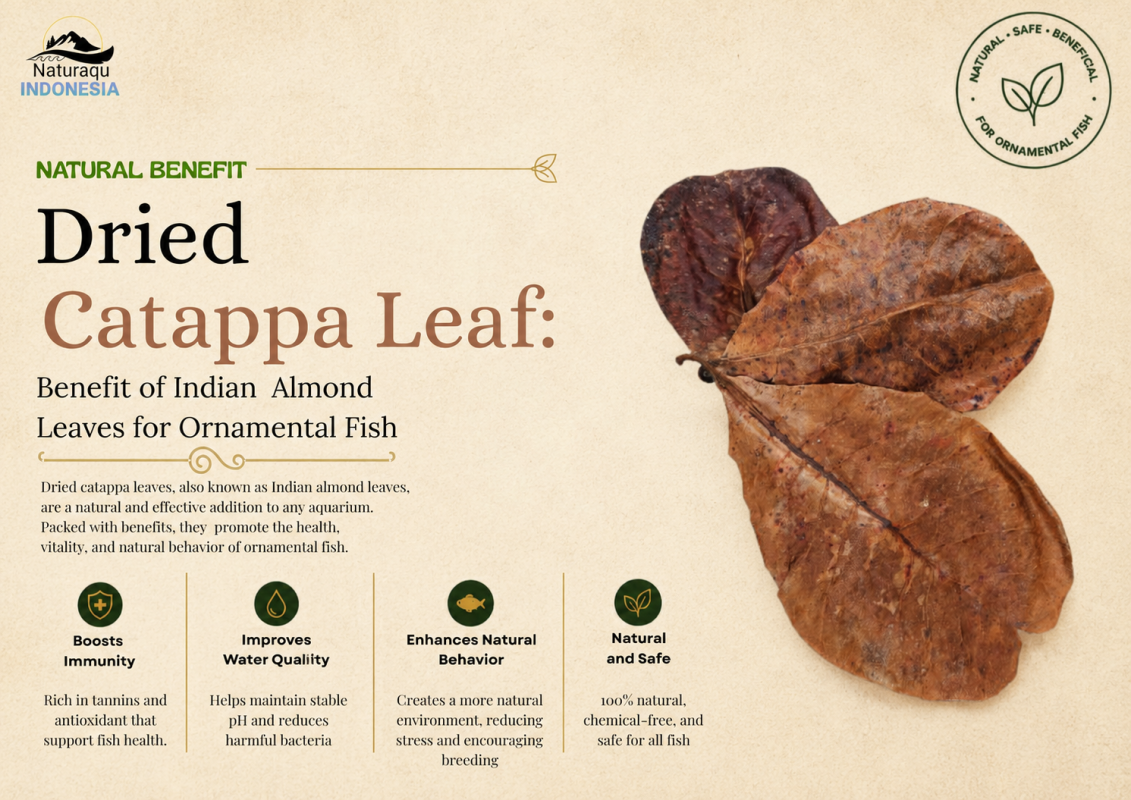
Dried Catappa Leaf: Benefits of Indian Almond Leaves for Ornamental Fish
Jul
If you’ve spent any time browsing an aquarium shop, you’ve probably noticed a stack of large, curled brown
This simple, natural product has become a staple for ornamental fish keepers who want healthier water and
happier fish without relying on synthetic chemicals.At Naturaqu, our dried catappa leaves are sourced directly from Borneo, known for producing some of the
highest quality catappa in the hobby. In this article, we’ll break down exactly why this leaf deserves a
permanent spot in your tank.
What Is Dried Catappa Leaf?
Dried catappa leaf comes from Terminalia catappa, a large tropical tree native to Asia, Africa, and
Oceania — you can read more about this species on
Wikipedia.
Once dried, the leaves are added to freshwater aquariums, where they slowly decompose and release beneficial
compounds into the water.
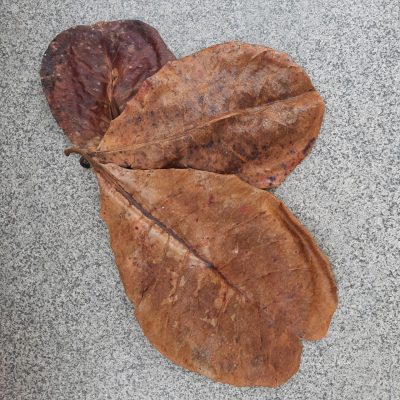
Image “Dried catappa leaf showing natural reddish-brown color and vein texture, ready to use in ornamental fish tanks”
Key Benefits of Dried Catappa Leaf for Your Aquarium
1. Natural Tannins for a Blackwater Habitat
As a dried catappa leaf breaks down in the tank, it gradually lowers the water’s pH and gives it a soft
yellow-brown tint. This mimics the blackwater rivers and streams that many popular ornamental species, like
bettas and tetras, originate from in the wild.
2. Antibacterial and Antifungal Support
Catappa leaves contain tannins, flavonoids, and saponins, compounds known for their antioxidant and
anti-inflammatory properties. Hobbyists have long used the leaf to help support fish recovering from fin
damage or minor infections, particularly in betta fish.
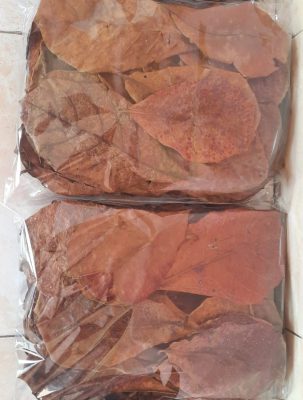
Image “Dried catappa leaf packed and ready for shipping, sourced and dried naturally by Naturaqu”
3. A Natural Food Source and Shelter
As catappa leaves decompose, they support the growth of beneficial microorganisms and biofilm, which in turn
creates a natural food source for shrimp and fry. The leaf litter also gives smaller or shyer fish a place to
hide, reducing stress in the tank.
4. Water Conditioning Without Chemicals
Some hobbyists believe the tannins released by catappa leaves may help bind heavy metals in aquarium water,
reducing their toxicity. While research is still ongoing, this natural conditioning effect is one reason the
leaf remains popular among aquascapers who prefer a chemical-free setup.
How to Use Dried Catappa Leaf in Your Tank
Using dried catappa leaf is simple:
- Rinse the leaf under running water to remove any dust or debris.
- Optionally, steep it in boiled water for a few minutes to help it sink faster.
- Place it directly into your tank — one leaf per 10–20 liters is a good starting point.
- Replace the leaf every 2–4 weeks as it fully decomposes, or leave it to break down naturally as fish food.
You can adjust the number of leaves depending on how strong a tannin tint you’d like in your water. If you’re
building a full blackwater setup, take a look at our
natural hardscape supplies to complete
the look.
Who Should Use Dried Catappa Leaf?
- Betta fish keepers looking to support fin health and reduce stress
- Shrimp keepers wanting a natural food source and hiding spot
- Aquascapers building a blackwater or biotope-style aquarium
- Breeders aiming to replicate natural spawning conditions
Why Choose Naturaqu’s Dried Catappa Leaf?
Naturaqu sources its catappa leaves straight from Borneo’s tropical forests, ensuring each batch is naturally
dried without added chemicals. As part of our
Natural Supply collection, dried catappa leaf is an
affordable, sustainable way to give your ornamental fish a healthier, more natural home.
Ready to give your tank a natural upgrade? Explore our full range of natural aquarium supplies, or read more
care tips like this on our blog, and start seeing the difference dried catappa leaf can
make for your fish.
