
Uncategorized
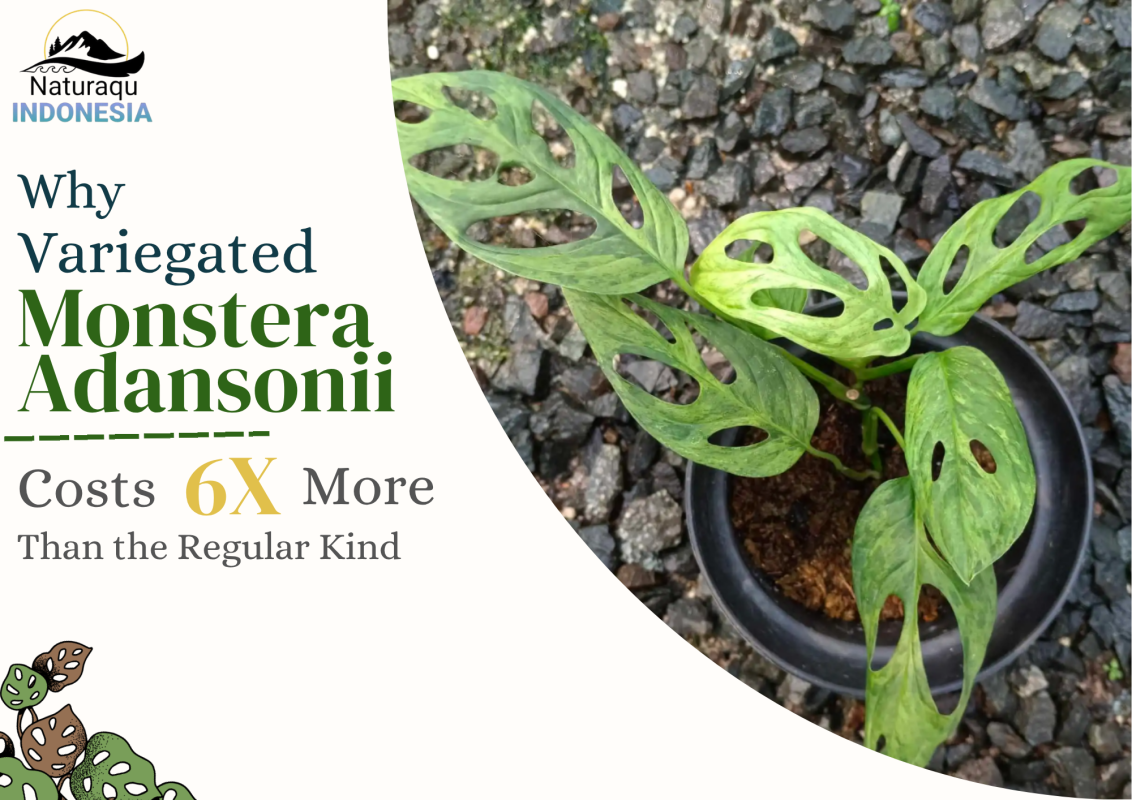
Why Variegated Monstera Adansonii Costs 6x More Than the Regular Kind
Jul
A regular Monstera Adansonii sells for around $5. The variegated form of the exact same species sells for $30 or more — six times the price for what looks, at a glance, like the same plant with a paint splash on it. The real reason has nothing to do with marketing and everything to do with how unpredictable variegated growth actually is.
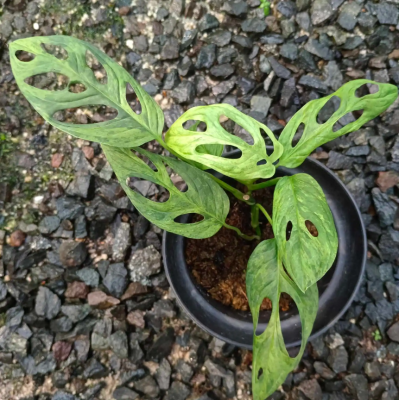
Image “Potted Monstera Adansonii Variegated with fenestrated green and white leaves”
What Variegation Actually Is
Variegation happens when parts of a leaf lose the ability to produce chlorophyll, leaving patches of white, cream, or pale green instead of solid green. In Monstera Adansonii, this shows up as streaks and blotches scattered across the leaf, sometimes covering half the surface, sometimes just a thin edge. Because the pattern is genetically unstable, no two leaves — even from the same plant — ever turn out quite the same.
Why Growers Can’t Just Produce More of It
Regular Adansonii propagates easily and predictably from almost any healthy cutting. Variegated Adansonii doesn’t work that way. A grower needs a mother plant that consistently throws stable variegated growth, and even then, not every cutting taken from that plant will carry the pattern. Some root out with almost no white at all and effectively become a regular green plant. Others come out nearly all-white and struggle to survive, since white tissue can’t photosynthesize enough to support the plant on its own. Out of a batch of cuttings, only a portion turn out balanced enough to sell as true variegated stock — and that low success rate is priced into every plant that does make it.
The Labor Behind Every Stable Cutting
Growers have to closely monitor which stems on a mother plant are producing usable variegation, prune away stems reverting to solid green, and wait longer for a cutting to mature enough to confirm its pattern is stable before it’s ready to sell. That extra monitoring time, plus the higher failure rate, is what regular green Adansonii never has to deal with.
What to Expect When Growing One
Once you have a stable variegated cutting, a few adjustments help keep it healthy:
- Brighter, indirect light than a regular Adansonii needs, since the white sections can’t photosynthesize and the plant leans harder on its green portions
- Consistent humidity around 60-70%, which helps new leaves unfurl fully instead of stalling
- Well-draining aroid mix, watered once the top few centimeters dry out
- A moss pole or trellis to climb, which encourages larger, more mature leaves with deeper fenestrations
When a Leaf Reverts
Occasionally a stem will start producing leaves that are almost entirely green again, essentially reverting toward the regular form. This is normal and not a sign of poor care — some growers prune those stems back so the plant redirects energy toward variegated growth instead. It’s part of what makes maintaining the variegated form an ongoing project rather than a one-time purchase.
So Is the Price Actually Justified?
Given the lower success rate in propagation, the extra monitoring required, and the fact that every leaf is genuinely one-of-a-kind, the 6x price gap reflects real production cost rather than a markup on the same plant. It’s less like paying more for the same product, and more like paying for a plant that’s structurally harder to reproduce at all.
Bring Home Your Own Variegated Monstera Adansonii
Naturaqu ships healthy, well-established Monstera Adansonii Variegated directly from our nursery. Every order includes a free Phytosanitary Certificate, and wholesale pricing is available for bulk orders. If a plant arrives dead on arrival, we replace it at no extra cost, excluding shipping. International shipping takes roughly 1-2 weeks once export permits clear.
Browse the regular green form and other Monstera varieties in our Monstera category, or see our full range of Variegated Plants. Questions about care or shipping? Reach out through our contact page — we’re happy to help before you order.
For more on the species itself, see its listing on Wikipedia and Plants of the World Online.
