
Uncategorized
Myrmecodia Lamii: The Plant That Grows Its Own Ant Colony House
Aug
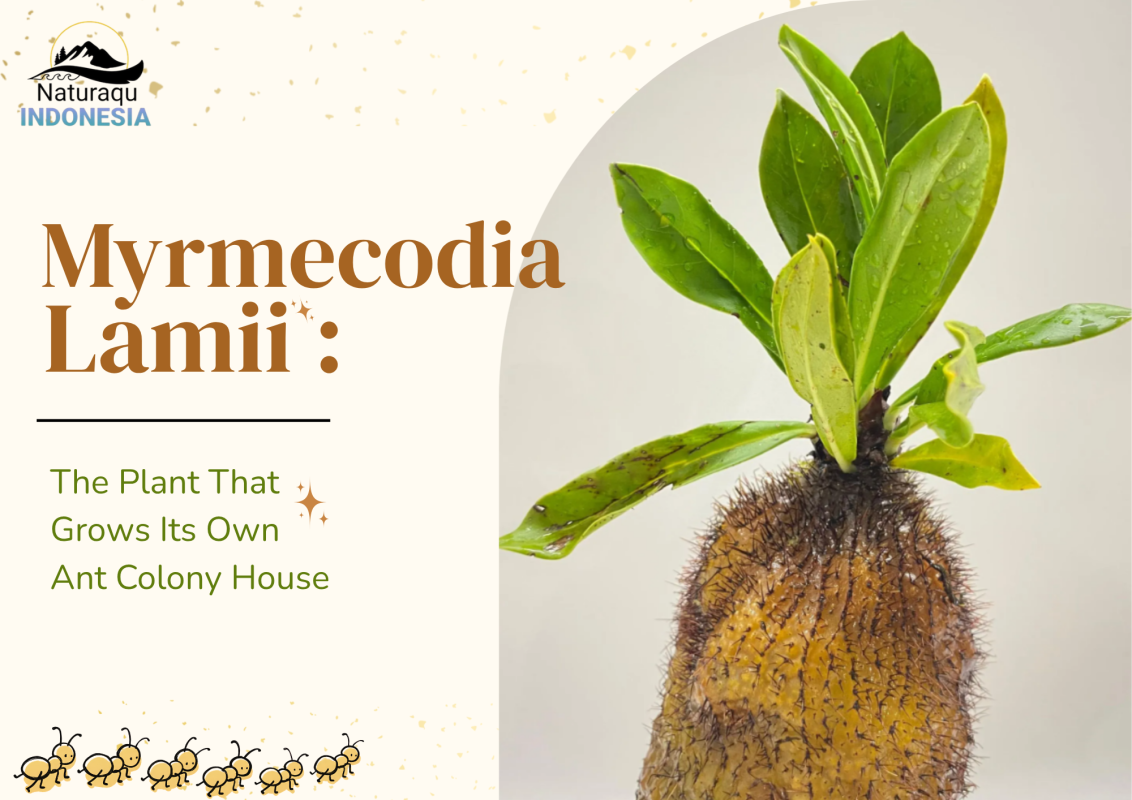
Most plants that interact with ants offer a small perk here and there, a bit of nectar or a sheltered leaf pocket. Myrmecodia Lamii goes much further. It grows a swollen, cone-shaped caudex covered in fine, bristly hairs, riddled with hollow chambers built specifically to house an entire ant colony inside the plant itself.
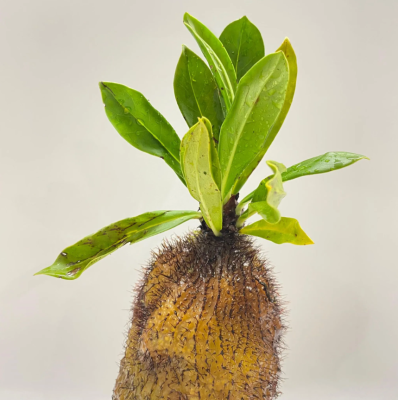
Image “Myrmecodia Lamii spiny brown caudex with green leaves on top”
The Spiny Caudex Is the Whole Story
That thick, tapered base covered in fine dark bristles is called a caudex, and it’s the defining feature of this genus. Inside, a maze of interconnected tunnels and chambers forms naturally as the plant grows. Ants move in, build their colony inside these chambers, and treat the caudex as a permanent nest rather than a temporary shelter.
What Each Side Gets Out of the Deal
The ants gain a secure, weatherproof home protected from predators and rain. In return, the plant absorbs nutrients from waste and debris the ants leave behind inside the chambers. This exchange is called myrmecophily, and Myrmecodia represents one of the most developed examples of it in the plant world, with a structure that seems purpose-built for the relationship rather than incidental to it.
Where This Species Grows Naturally
Myrmecodia Lamii is native to Indonesia, where it grows as an epiphyte, rooting onto tree branches rather than into soil. Living high in the canopy limits access to soil nutrients, which makes the ant partnership especially valuable. The nutrients ants bring into the caudex supplement what the plant can pull from rain and air alone.
Growing Conditions It Needs
Recreating an epiphytic, tree-dwelling habitat keeps this species healthy in cultivation:
- Bright, indirect light — this species tolerates more light than typical shade-loving epiphytes
- A chunky, extremely well-draining mix, similar to orchid bark, since the caudex rots easily in wet conditions
- Moderate humidity, without needing the constant saturation some rainforest plants demand
- Careful, infrequent watering, letting the mix dry out well between waterings
Do You Need Ants to Grow One at Home?
No. Myrmecodia Lamii grows perfectly well as a houseplant without any ant colony present. The caudex still develops its characteristic spiny, chambered shape on its own, since that structure is genetically programmed rather than triggered by the ants themselves. Growing one indoors simply means keeping an unusual, sculptural plant without its wild symbiotic partner.
Common Mistakes New Growers Make
Overwatering is the fastest way to lose this plant. The caudex holds moisture inside its chambers, so soggy growing mix leads to rot before any visible warning signs appear above the surface. Letting the mix dry out fully between waterings matters more here than with most other epiphytes.
Why Collectors Are Drawn to This One
Few houseplants look genuinely alien on a shelf, and Myrmecodia Lamii’s spiny, tapered caudex does exactly that, topped with an ordinary cluster of glossy green leaves that gives no hint of the hollow structure underneath. For collectors interested in plants with real ecological stories behind their strange shapes, this one delivers both.
Bring Home Your Own Myrmecodia Lamii
Naturaqu ships healthy, well-established Myrmecodia Lamii directly from our nursery. Every order includes a free Phytosanitary Certificate. We offer wholesale pricing for bulk orders. If a plant arrives dead on arrival, we replace it at no extra cost, excluding shipping. International shipping takes roughly 1-2 weeks once export permits clear.
Browse more Myrmecodia varieties in our Myrmecodia category, or see our full range of Rare Plants. Questions about care or shipping? Reach out through our contact page — we’re happy to help before you order.
For more on the genus itself, see the overview on Wikipedia and the genus record on Plants of the World Online.
