Moss Java
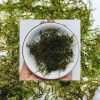
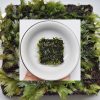
$15
Hello and thank you for visiting Naturaqu Indonesia!
We specialize in selling endemic plants from the Island of Borneo, Indonesia. We offer international shipping with various methods, including door-to-door, port-to-port, and via trans shippers in the USA, the EU, and Malaysia. Please contact us for a shipping quote.
Why Choose Us?
• Free Phytosanitary Certificate: We provide a Phytosanitary Certificate at no extra charge.
• Special Discounts: Enjoy a 20%-60% discount on orders of $1,000 or more.
• Import Regulations: An import license is required if it is a prerequisite in your country.
• Quick Shipping: Plants can be dispatched within 1-2 weeks once all necessary documents are prepared.
• Local Buyers Welcome: We are happy to serve buyers from Indonesia as well!
About Our Plants:
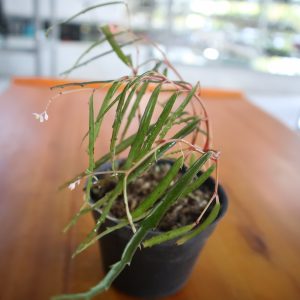
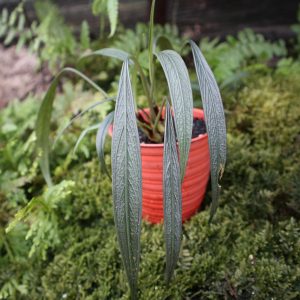
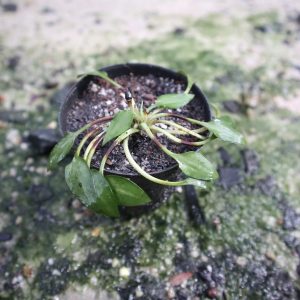
• Common Name: Moss Flame
• Origin: Endemic to Indonesia
• Condition: All plants are in good health, and photos are representative.
• Sales: Plants are sold cup.
Please Contact Us:
• Email: Naturaqu123@gmail.com
• Instagram: Naturaqu.Indonesia
• YouTube: Naturaqu Indonesia
• Facebook Page: Naturaqu Indonesia
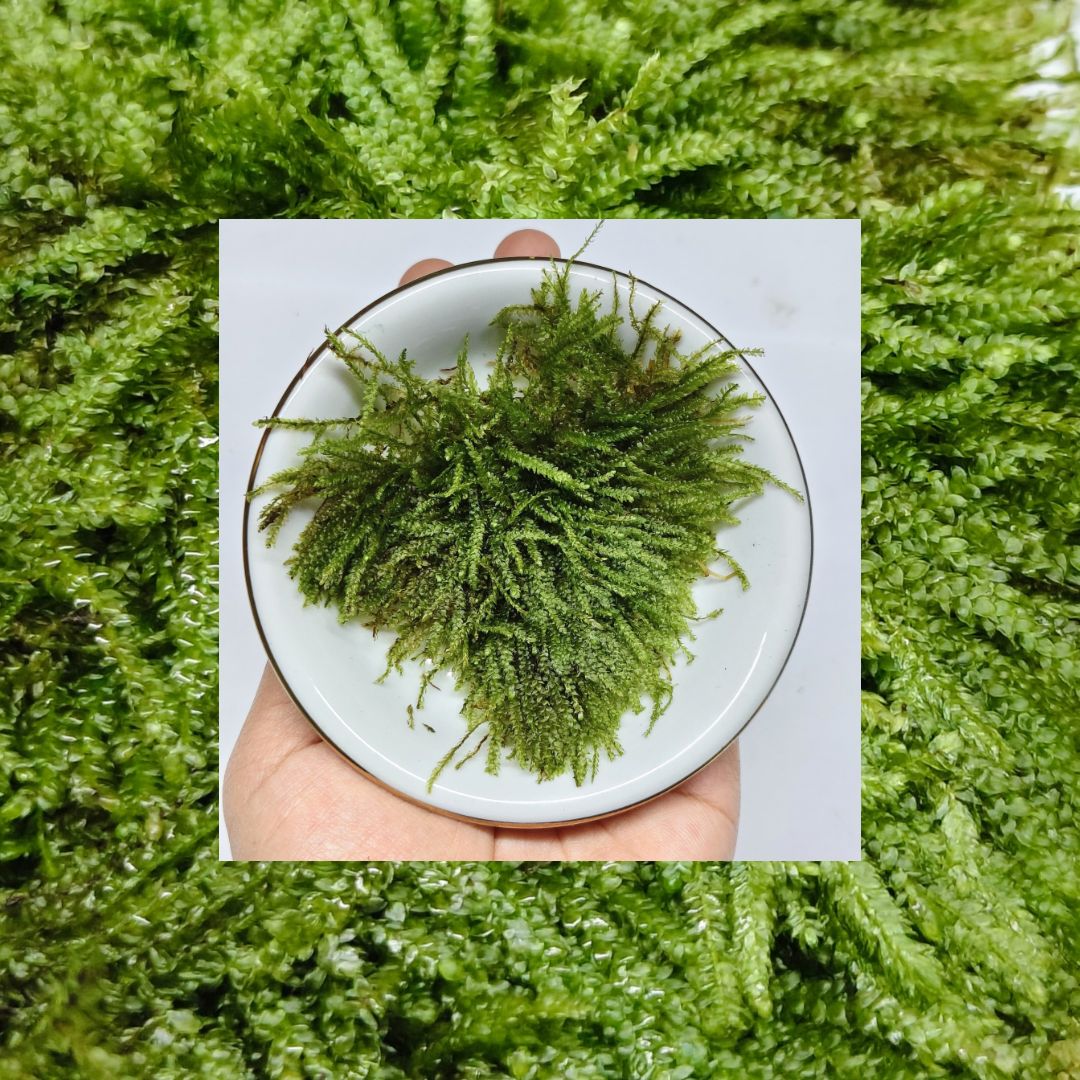
Java Moss ranks among the toughest plants in the aquarium hobby. New hobbyists often start with it for one simple reason: it almost never dies. The plant clings to driftwood, rocks, or mesh within weeks. From there, it spreads into soft, irregular green mats that soften any hardscape.
What Makes Java Moss So Popular
Few aquatic plants offer this level of flexibility. You can let it grow wild for a jungle look, or trim it weekly for a tighter, more manicured style. Either way, the plant adapts without complaint. This flexibility explains why so many aquascapers, from total beginners to seasoned hobbyists, keep coming back to it.
Practical Benefits Beyond Looks
- Improves water quality — absorbs ammonia and nitrates as it grows
- Protects baby fish — fry hide easily within its dense strands
- Skips the fuss — no CO2 or special substrate needed
- Grows almost anywhere — tolerates low light and unstable parameters better than most plants
Setting Java Moss Up for Success
Start by tying small clumps onto driftwood or a mesh mat using cotton thread or fishing line. Avoid pushing it into substrate, since buried moss tends to rot rather than root. Within 3 to 6 weeks, it anchors itself naturally. After that, trim it every few weeks to keep growth even and prevent dead spots underneath.
Water temperature matters less than people expect. Java Moss handles a fairly wide range, though it grows best between 70–78°F (21–26°C) without strong direct lighting.
Should Beginners Start With Java Moss?
Most aquascaping guides recommend it as a first plant, and for good reason. It forgives mistakes that would kill more delicate species, like inconsistent dosing or temperature swings. Once you’ve got the hang of it, you can branch out to trickier plants with more confidence. Explore everything else you’ll need at [Internal Link: shop all products → /products].
Hobbyist communities consistently cite Java Moss for the biofilm and microfauna it supports, which in turn feeds shrimp and young fish. [Outbound Link: Taxiphyllum barbieri overview → https://en.wikipedia.org/wiki/Taxiphyllum_barbieri]
Related products