
Uncategorized
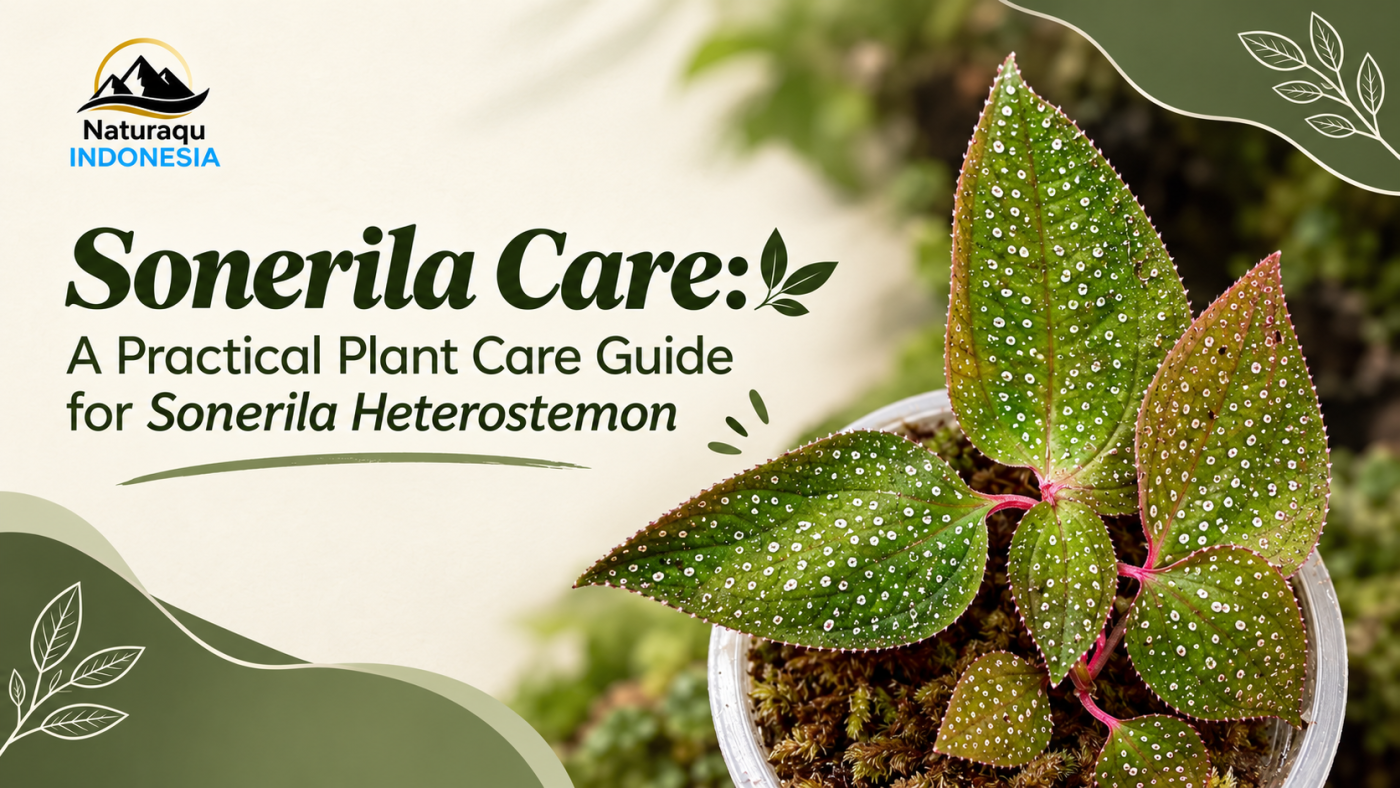
Sonerila Care: A Practical Plant Care Guide for Sonerila Heterostemon
Oct
Sonerila care is simple once you know where this plant comes from. Sonerila is a group of small tropical herbs that grow in damp, shaded forests, and Sonerila heterostemon is a rare form that collectors enjoy for its delicate foliage and tiny flowers. In this guide, you will learn what conditions it likes and how to solve common problems.
What Is Sonerila?
Sonerila belongs to the Melastomataceae family, the same family as Medinilla and Bertolonia. Most species are small, soft-stemmed herbs found in moist, shaded places across tropical Asia, often near streams and damp banks. Their leaves usually show clear veins, and many species produce small flowers.
Information about Sonerila heterostemon specifically is limited, so the tips below follow the general needs of the genus. You can read more about the group on Wikipedia’s Sonerila page.
Sonerila Care: Light and Temperature
Good Sonerila care starts with soft light. In nature, these plants live under taller plants, so choose bright indirect light or light shade, such as a spot near an east-facing window with a sheer curtain. Direct sun can scorch the thin leaves quickly. If the light is too low, the stems stretch and growth slows down.
Mild to warm temperatures of about 18–27°C (64–81°F) suit it best. Keep the plant away from cold drafts, air conditioner vents, and hot, stuffy corners.
Sonerila Care: Water and Humidity
This plant does not like to dry out. Keep the mix evenly moist, but never soggy, because roots that sit in water can rot. Water lightly when the surface starts to feel slightly dry, and always let excess water drain.
Moderate to high humidity keeps the leaves fresh. You can raise humidity by:
- Grouping the plant with other humidity-loving plants
- Placing the pot on a tray of pebbles and water
- Using a small humidifier nearby
- Keeping it in a sheltered spot with good airflow, away from dry wind
Best Soil for Sonerila
Use a loose, airy mix that holds some moisture. A simple recipe is 2 parts cocopeat, 1 part perlite, 1 part fine bark, and a handful of sphagnum moss. Use a pot with drainage holes, and avoid heavy garden soil.
Feeding and Propagation
Feed lightly. A balanced liquid fertilizer at quarter strength once a month during active growth is enough. Too much fertilizer can burn the delicate roots.
Many soft-stemmed herbs can be multiplied from stem cuttings. Take a healthy tip with a few leaves, place it in a moist, airy mix, and keep it warm and humid until new growth appears. Results can vary, so be patient and try several cuttings if you can.
Common Sonerila Care Problems
- Crispy leaf edges: The air is too dry. Raise humidity or move the plant away from fans and vents.
- Yellow leaves: Usually caused by overwatering or poor drainage.
- Leggy, stretched stems: The light is too weak. Move the plant closer to a bright, indirect light source.
- Leaf spots or mold: Humid air without airflow can cause fungal problems. Remove affected parts and improve ventilation.
- Tiny pests: Fungus gnats or aphids can appear. Remove them gently and avoid strong chemicals.
Check your plant every week so you can act early.
Where to Find Sonerila heterostemon
Ready to start your collection? You can buy Sonerila heterostemon here. You can also browse our rare tropical plants for more collector favorites.
Final Thoughts
Sonerila care comes down to a few habits: soft indirect light, mild temperatures, steady moisture, and good humidity with fresh airflow. Give this small rainforest plant a stable, sheltered home, and it will reward you with healthy foliage. Start with one plant, observe how it responds, and adjust your routine slowly.
