
Uncategorized
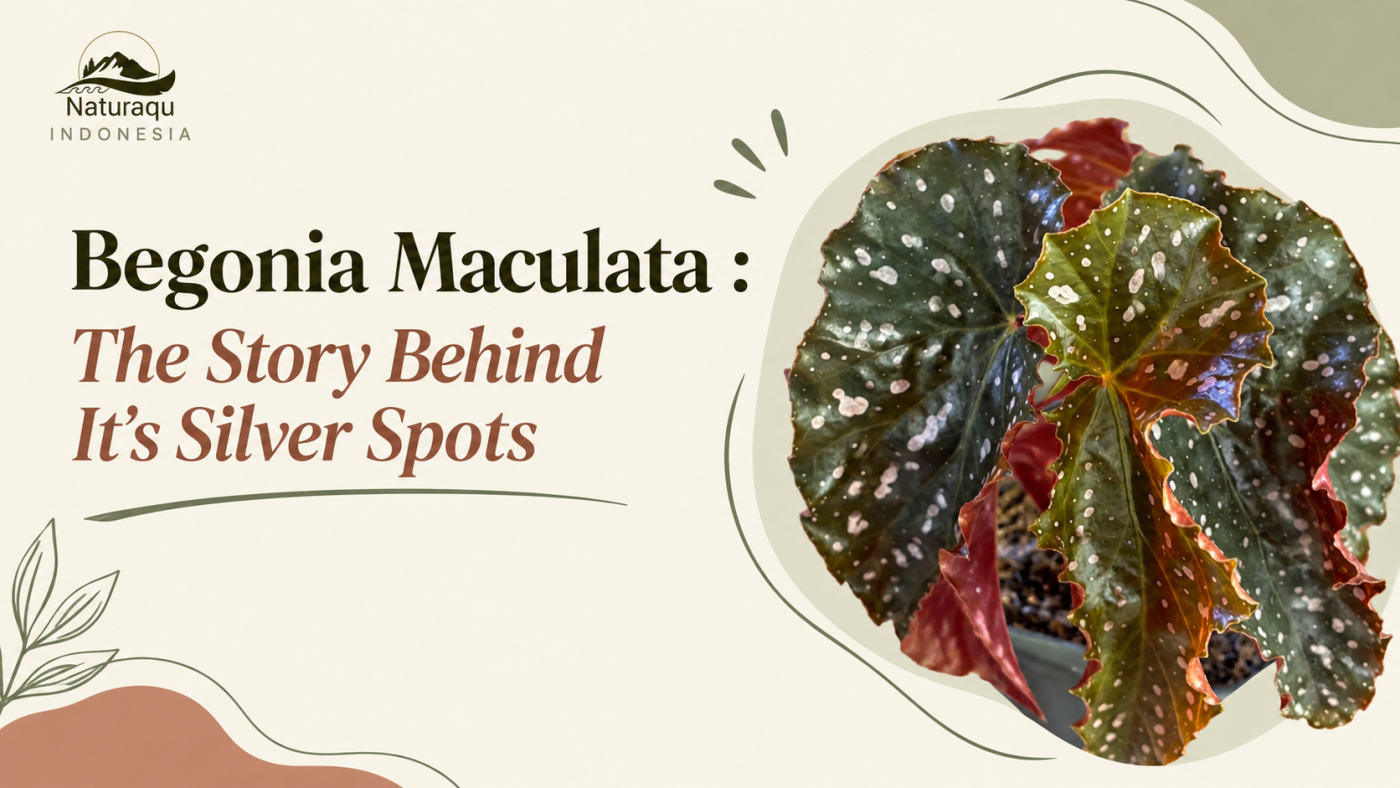
Begonia Maculata: The Story Behind Its Silver Spots
Oct
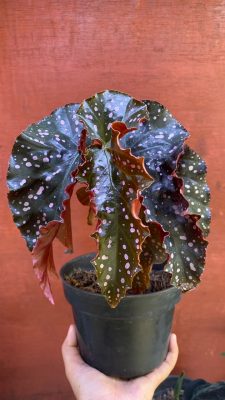
Begonia maculata is one of the few houseplants that looks like a piece of art. Its leaves are shaped like angel wings, dotted with silver, and painted deep red underneath. It is also known as Angel Wing begonia or polka dot begonia. In this article, you will learn where this plant comes from, why it has spots, and how to keep those spots looking sharp.
Where Does Begonia Maculata Come From?
Begonia maculata is native to Brazil, where it grows in the warm, humid Atlantic Forest. It was first described by the Italian botanist Giuseppe Raddi in the early 1800s. The species name “maculata” is Latin for “spotted”, so the name literally describes the plant’s look.
In the wild, it grows in the understory, under the shade of taller trees. This explains why it prefers bright but filtered light at home. You can read more about its botany on Wikipedia’s Begonia maculata page.
Why Is Begonia Maculata Spotted?
Nobody can say for sure, but there are a few popular theories. The silver spots may help the leaf reflect and scatter light in dim forest conditions. Spots may also break up the outline of the leaf, which could make it less obvious to hungry insects. Scientists are still studying leaf patterns in begonias, so treat these as ideas rather than proven facts.
What we do know is that the spots are strongest when the plant gets enough light. In very low light, the pattern can fade. In harsh sun, the leaves can scorch. A bright spot with filtered light keeps your Begonia maculata looking its best.
The Angel Wing Shape and Red Underside
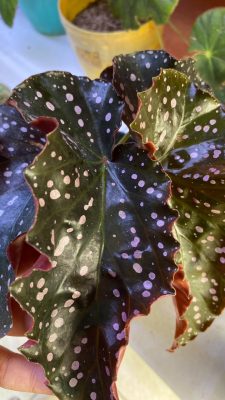
The common name “Angel Wing” comes from the leaf shape. Each leaf is long, slightly curved, and uneven on both sides, like a small wing. Flip a leaf over and you will find a rich red or burgundy underside. This color comes from natural pigments called anthocyanins. In many forest plants, these pigments are thought to help use light that passes through the leaf.
The plant also grows on upright, bamboo-like canes with visible joints. That is why it is often called a cane begonia. Indoors, a healthy plant can reach about 1 meter or more over time.
Begonia Maculata Fun Facts
- It flowers: In spring and summer, it produces hanging clusters of white or pink flowers. Each plant carries separate male and female flowers.
- Spots vary: The variety “Wightii” is known for larger leaves and bigger, bolder spots.
- It roots easily: Stem cuttings in water or moist mix can root within a few weeks.
- It is not pet-friendly: The plant can irritate pets if chewed, so keep it out of reach of cats and dogs.
Begonia Maculata Care in Brief
You do not need advanced skills to keep Begonia maculata happy. A few habits are enough:
- Light: Bright, indirect light. Avoid strong afternoon sun.
- Water: Water when the top 2–3 cm of soil feels dry. Never leave it sitting in water.
- Humidity: Moderate to high humidity, with good airflow to prevent powdery mildew.
- Soil: Loose, well-draining mix with cocopeat, perlite, and a little compost.
- Pruning: Pinch the tips to keep the plant bushy instead of leggy.
- Temperature: Warm conditions between 18–28°C (64–82°F).
If you see brown leaf edges, the air is likely too dry. If the leaves turn yellow, check for overwatering first.
Where to Buy Begonia Maculata
Ready to bring this spotted beauty home? You can buy Begonia Maculata (Angel Wing) here. You can also browse our rare tropical plants to find more collector favorites.
Final
Begonia maculata combines bold leaf patterns, a vivid red underside, and delicate flowers in one easy-to-grow plant. Give it filtered light, steady moisture, and good airflow, and it will reward you with striking foliage all year. Start with one plant and watch how its spots change with the light in your home.
