
Uncategorized
Aquascaping Guide Dried Leaves in Aquascaping
Apr
Benefits, Types & How to Use Them
Dried leaves have become one of the most beloved natural elements in the aquascaping world — transforming aquariums into living replicas of tropical forest floors and blackwater biotopes.
Long before aquascaping became an art form, fallen leaves were decomposing at the bottom of rivers and streams across Southeast Asia, South America, and Africa, creating rich, tannin-stained waters that countless fish species call home. Today, aquarists worldwide are embracing this natural element — not just for its striking aesthetic, but for the measurable biological and behavioral benefits it offers.
Why Use Dried Leaves in Aquascaping
Natural Water Conditioning
To begin with, dried leaves release tannins and humic acids, which naturally lower pH and soften the water. As a result, they help recreate the acidic blackwater conditions preferred by many tropical fish and shrimp. In particular, this is beneficial for species that originate from forest streams and river systems.
Biofilm and Food Source
In addition, as the leaves gradually decompose, they develop a layer of biofilm. This biofilm, in turn, becomes a critical food source for fry, nano fish, and dwarf shrimp. Because of this, leaf litter plays an important role in supporting early-stage life and microfauna within the aquarium.
Shelter and Natural Behavior
Furthermore, the complex structure of dried leaves provides shelter and natural boundaries within the tank. As a result, fish are able to establish territories more easily, which helps reduce aggression. At the same time, this encourages more natural foraging and hiding behavior.
Antibacterial Properties
Moreover, tannins released by the leaves have mild antibacterial and antifungal properties. Consequently, they can help reduce pathogen presence in the water column. In the long run, this supports a healthier environment and strengthens the immune response of your livestock.
Visual and Aesthetic Impact
Finally, beyond functional benefits, dried leaves contribute significantly to the overall aesthetic. Their rich amber and brown tones, combined with gradual decomposition, create a warm and organic depth. As a result, the aquarium more closely resembles a natural ecosystem rather than an artificial setup.
Water chemistry note
Leaf litter works best in tanks with soft, low-KH water. In hard, high-KH water, the buffering capacity neutralizes tannins faster, reducing their effect on pH.
Common types of leaves
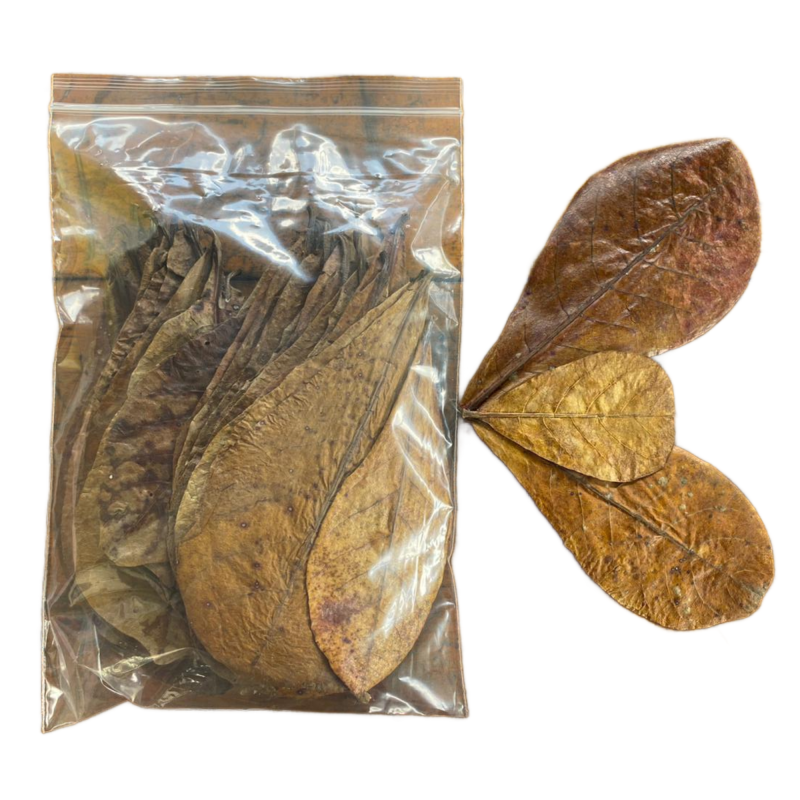
Indian Almond
Terminalia catappa
The gold standard. Large, robust leaves that decompose slowly, releasing strong tannins. Excellent for betta, discus, and shrimp tanks.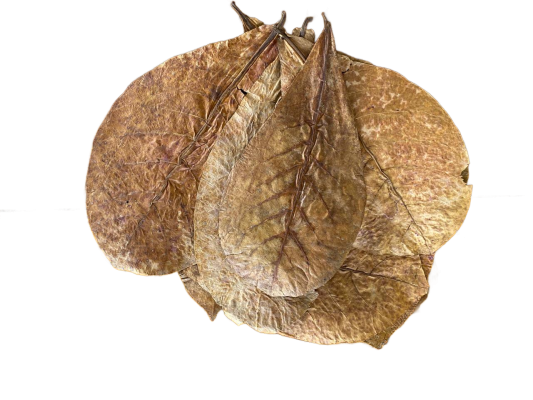
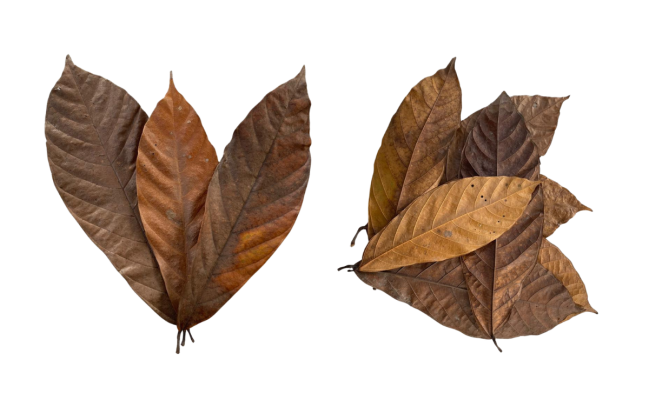
Cacao Leaves
Theobroma cacao
Large, glossy leaves from the cacao tree that decompose at a moderate pace. Rich in tannins and humic acids, they produce a warm amber tint in the water. Particularly popular in South American biotope tanks. Shrimp graze actively on the biofilm that forms on their surface, and the broad leaf shape provides excellent cover for small fish and fry.
Cinnamon
Cinnamomum verum
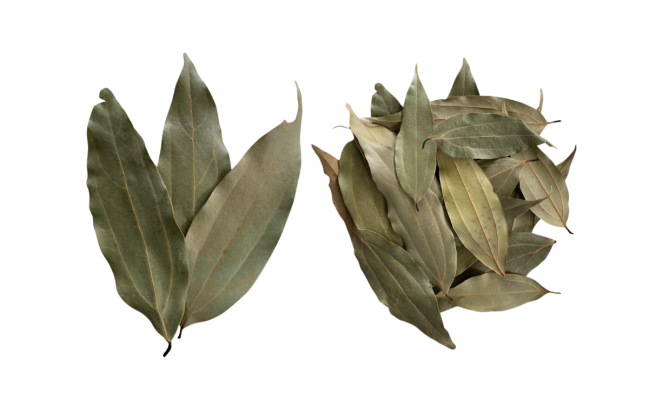
Stiff, oval leaves with a leathery texture decompose at a slow to moderate rate; as a result, they are able to maintain their structure for several weeks. In addition, they release mild tannins and carry natural antimicrobial compounds—particularly cinnamaldehyde—which, in turn, help suppress harmful bacteria and fungi in the water column. Because of these properties, they are a strong choice for shrimp tanks that are prone to bacterial issues. Furthermore, the leaves emit a subtle spiced aroma during preparation; however, this scent gradually dissipates once fully submerged.
Mahogany
Swietenia mahagoni
Large, pinnate leaves from one of the tropics’ most iconic hardwood trees. They decompose at a slow to moderate pace, holding their structure well and creating a rich, layered forest-floor aesthetic. Mahogany leaves release a good quantity of tannins and humic acids, producing a deep amber water tint that suits blackwater and Southeast Asian biotope tanks. Their broad surface area makes them ideal foraging and shelter zones for small fish, shrimp, and fry. Biofilm colonizes the surface readily within the first week of submersion.

Seagrape
Coccoloba uvifera
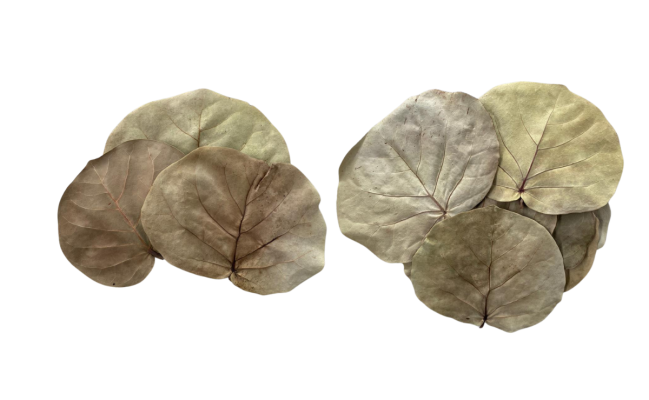
Distinctive round, leathery leaves with prominent red veining retain their striking shape long after drying; as a result, they stand out visually even over time. Moreover, they decompose very slowly, which makes them one of the most structurally durable options available. In addition, seagrape leaves release moderate tannins and, consequently, produce a gentle golden tint in the water. Because of their unusual circular form, they add strong visual interest to the substrate; furthermore, they are particularly popular in paludarium and coastal biotope setups. At the same time, shrimp and small fish readily use them as both shelter and a grazing surface.
Teak
Tectona grandis
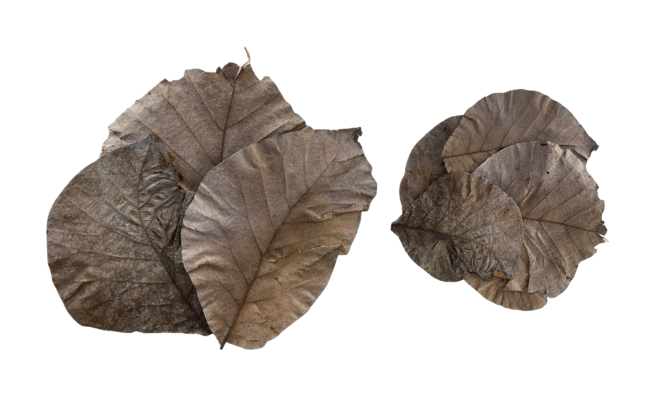
Very large, rough-textured leaves native to the tropical forests of South and Southeast Asia — a region that overlaps with the natural habitat of many popular aquarium species. Teak leaves decompose at a moderate pace and release substantial tannins, producing a rich dark amber tint well suited to blackwater and Asian biotope tanks. Their coarse surface texture encourages dense biofilm colonization, making them an excellent grazing substrate for shrimp and small bottom-dwelling fish. The sheer size of a single teak leaf can serve as a dramatic focal point on the substrate floor.
How to Prepare and Use Dried Leaves
Preparation is straightforward but important — especially for wild-collected leaves, which may carry pathogens, pesticides, or parasites.
Sourcing Safe Leaves
To begin with, proper sourcing is essential. Always use pesticide-free leaves, either collected from clean environments or purchased from reputable aquascaping suppliers. In particular, avoid roadside areas or treated gardens, as contamination risks are significantly higher.
Cleaning and Sterilization
Before adding leaves to your aquarium, remove any surface debris by rinsing thoroughly under running water. Sterilization is essential:
- Boil for 5–10 minutes to eliminate pathogens and help the leaves sink faster
- Or soak in a diluted bleach solution (1:20) for 15 minutes, followed by thorough rinsing
Pre-Soaking Process
Soak sterilized leaves in clean water for 24–48 hours. This step:
- Reduces the initial tannin surge
- Helps the leaves become waterlogged so they sink immediately.
Placement in the Aquarium
Once prepared, the leaves can be placed directly onto the substrate. Ideally, arrange them in a natural, overlapping pattern to replicate a forest floor. If necessary, you can anchor them temporarily with stones; however, most leaves will sink on their own within one to two days.
Maintenance and Replacement
As leaves break down:
- Replace them periodically to maintain aesthetics and function
- Or leave partially decomposed structures in place to support biofilm and microfauna.
DESIGN TIP
VARY THE LEAF SIZES AND SPECIES. LAYERING LARGE INDIAN ALMOND LEAVES BENEATH SMALLER CACAO LEAVES CREATES A FAR MORE CONVINCING AND VISUALLY INTERESTING SUBSTRATE THAN USING A SINGLE TYPE UNIFORMLY SPREAD ACROSS THE FLOOR.
